
Before the war, Oleksandr Skumin ran his own spinal treatment clinic in Kyiv. In the first days of the invasion, the 38-year-old didn’t hesitate — he went to the territorial defense. They took him immediately. He had a medical background. They knew exactly where he was needed.
Today, Oleksandr serves as a senior medic in the 93rd Separate Mechanized Brigade on the Donbas front line. Around 80% of his work is battlefield casualty evacuation and pre-hospital care. Alongside active service, he is studying to become a paramedic at Ternopil National Medical University.
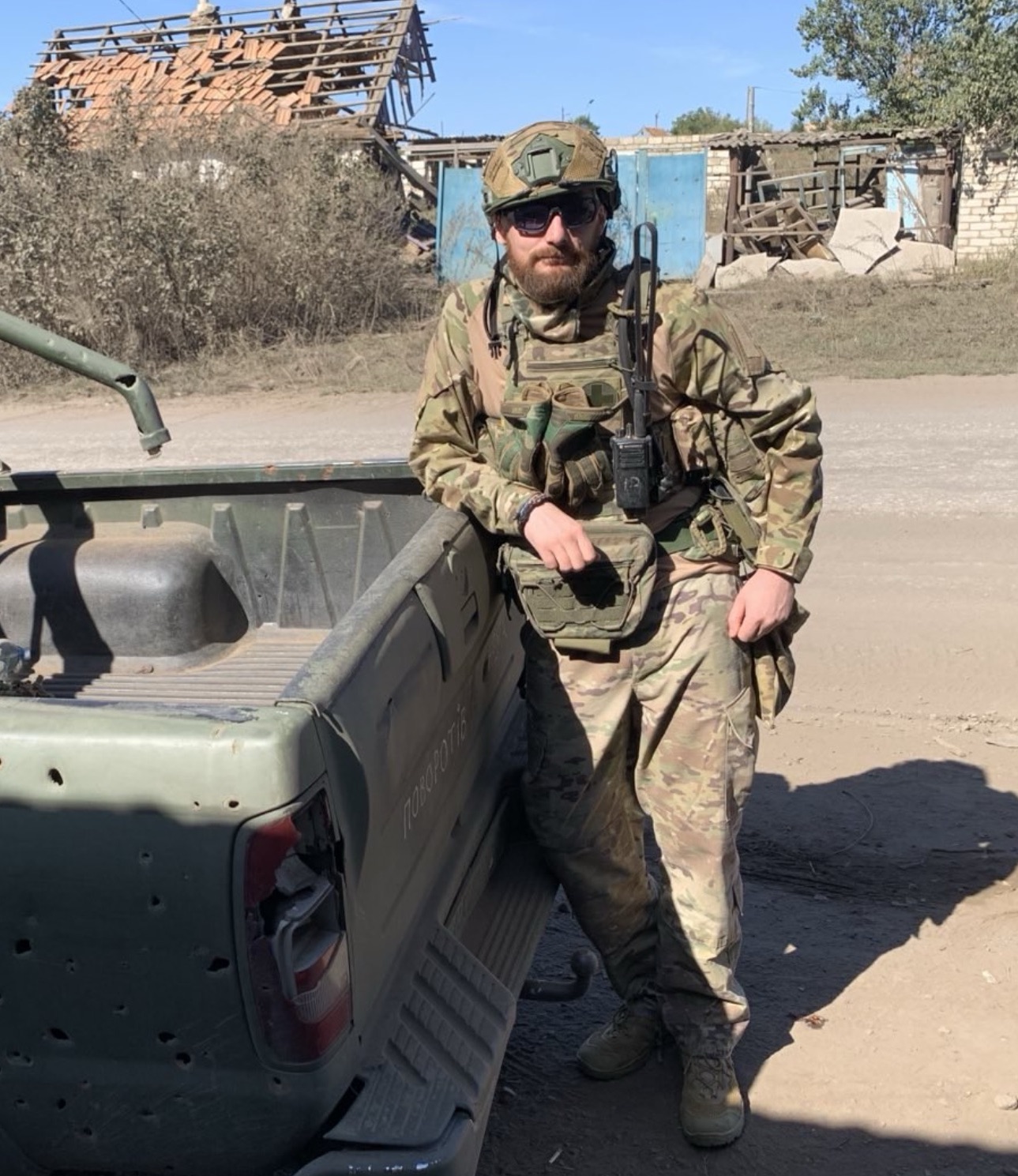
The hardest part of the job
Like most of his colleagues, Oleksandr names evacuation under enemy drones — or the complete inability to evacuate at all — as the defining medical challenge of this war.
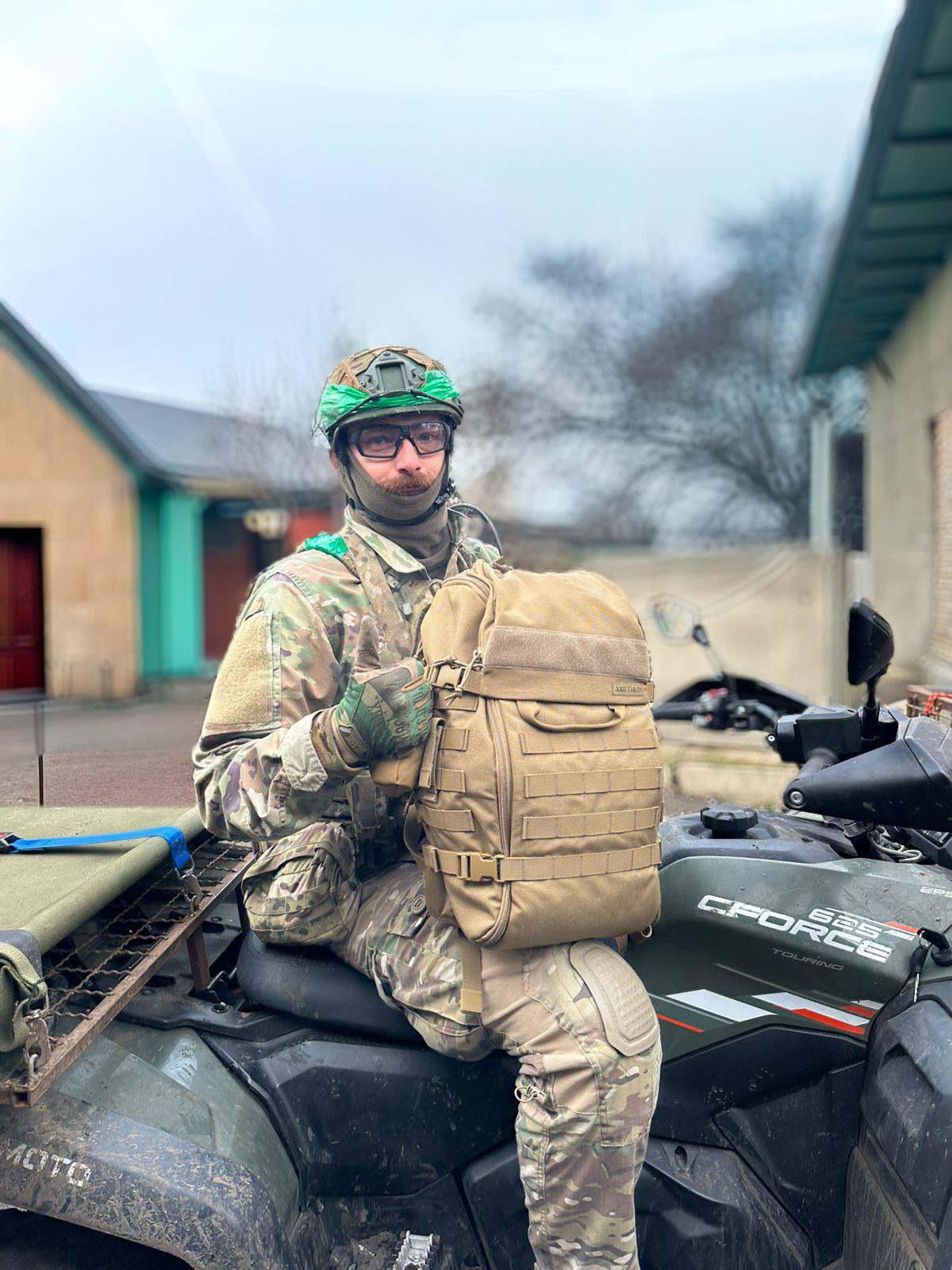
His unit uses ATVs to navigate the battlefield. They are maneuverable, and give the crew a better chance of detecting danger early enough to react. But for the wounded, they carry their own risks.
“An ATV gives you mobility — but it exposes a wounded person to the elements. Hypothermia is a real danger. So you have to think not just about movement and FPV drones, but about warmth — active thermal blankets, heat packs,” says Oleksandr.
One day at a time
On the front line, Oleksandr lives one day at a time. It’s easier that way — to stay focused on the one task that matters: get to the stabilization point and hand the wounded soldier to the doctors.
Dreams of home wait until after he leaves the positions.
“Only then do I allow myself to think about it.”
At home, his wife, his mother, his 12-year-old daughter, and a Cane Corso are waiting for him. His family supports him in everything — and that, he says, makes all the difference. 💛💙