
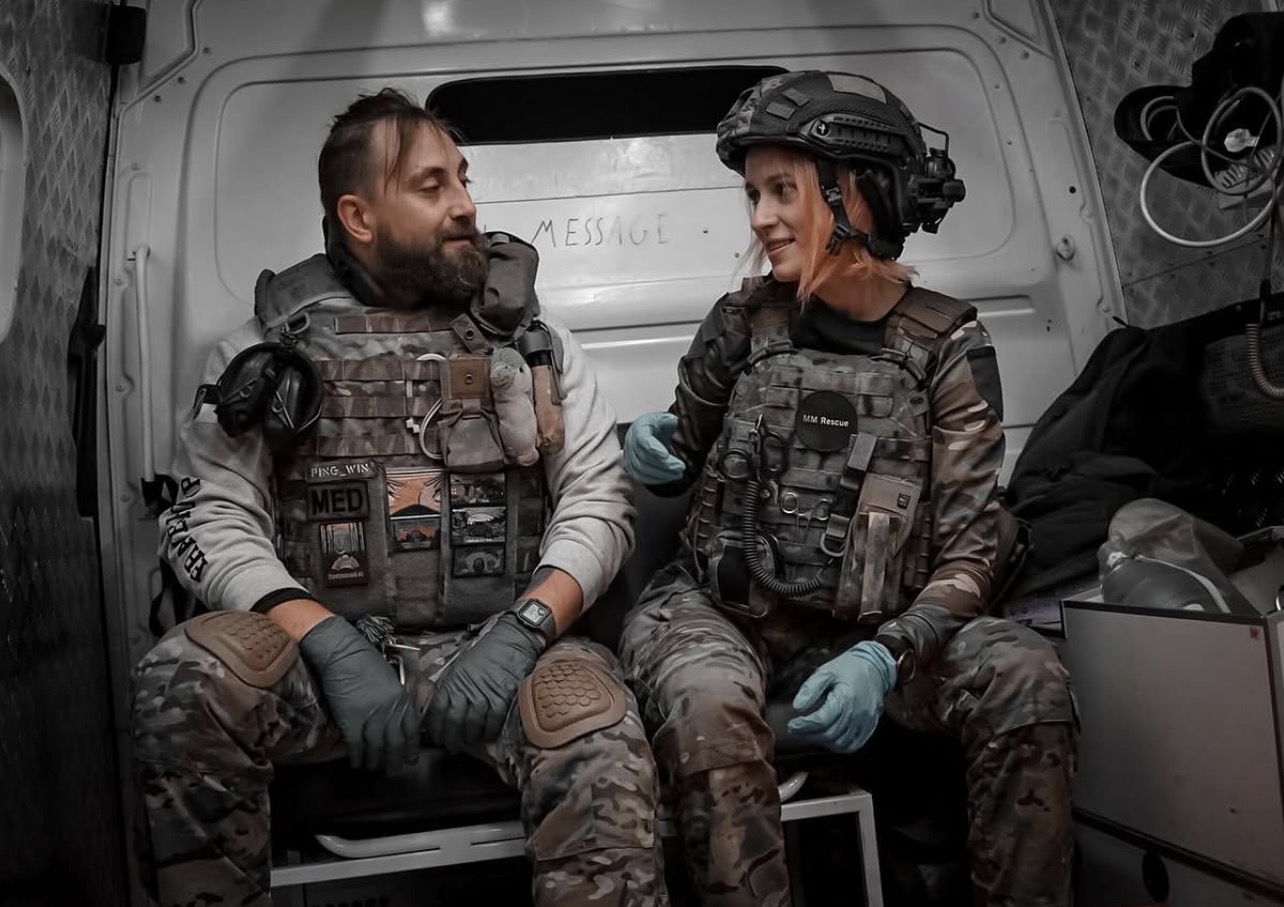
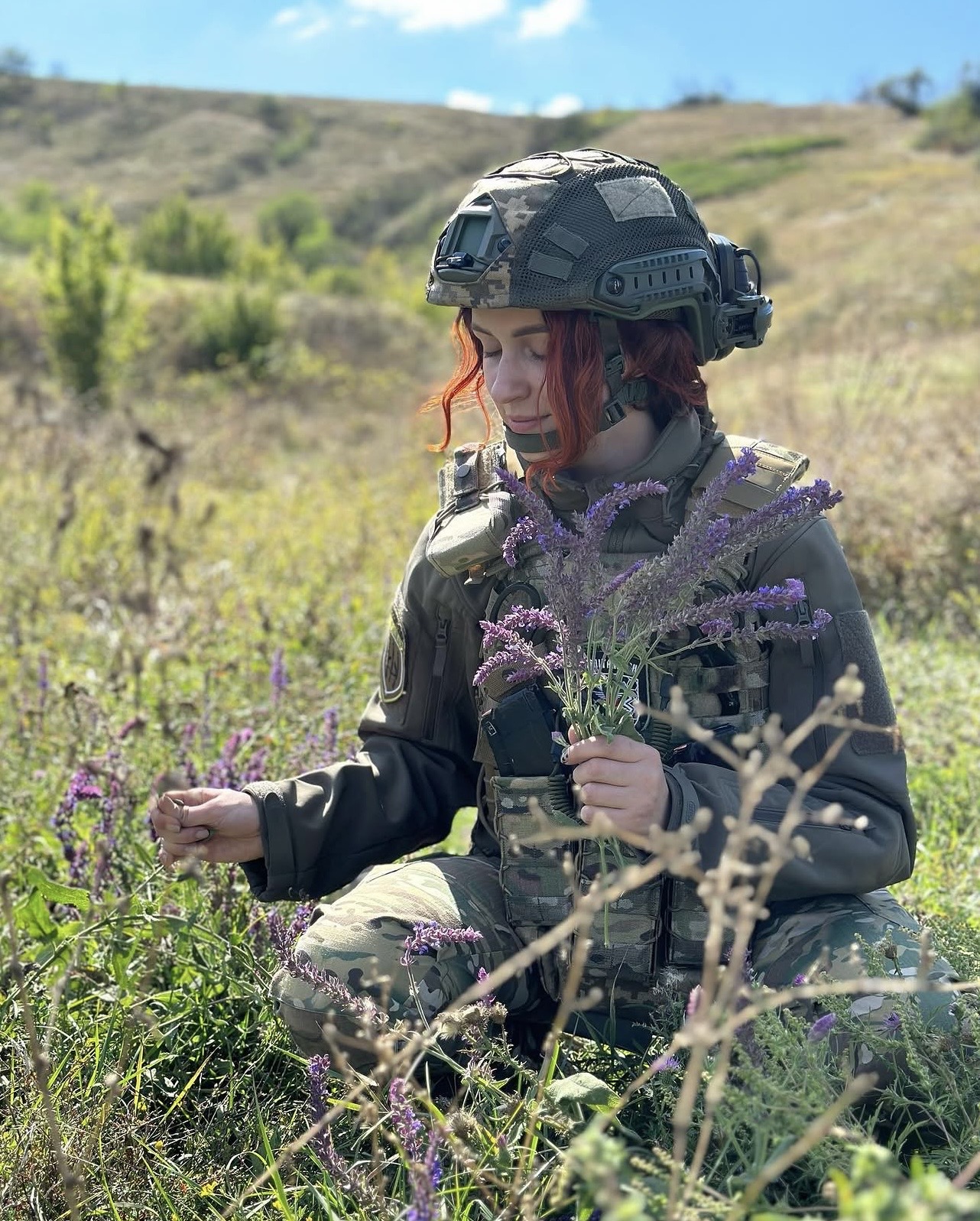
Ukrainian frontline medic Aryna, became the guest for the new media project Lelea launched in partnership with the Prolonged Field Care Podcast. Its goal is to create a platform for Ukrainian frontline medics to share firsthand field trauma-care experience with American counterparts.
Aryna has been working in tactical medicine for four years. She started as an instructor in 2022, joined a medical evacuation battalion, and is now serving in the regular Ukrainian army doing medevac work on the front line. In a recent episode of the Prolonged Field Care Podcast, she gave one of the most detailed firsthand accounts of how frontline medicine in Ukraine has transformed since the full-scale invasion began.
The picture she paints is of a system in constant, forced evolution — where the pace of change on the battlefield has outrun every training curriculum, every equipment list, and every protocol written before this war.
The War Changes Every Six Months
“Everything changes in several months,” Aryna told host Dennis. “That’s why we need to change education, gear, and approach — very, very quickly. You need to be adaptive, and that’s a huge amount of work.”
In 2022, Ukrainian field medics were trained to handle the basics: tourniquets, wound packing, essential CLS-level skills under the TCCC protocol. Today, that baseline is no longer enough. Medics are now expected to perform blood transfusions, convert tourniquets, manage prolonged casualties, clean infected wounds, and monitor patients for days — all under fire and often without evacuation.
“Combat medics now have much more responsibilities. They need to be qualified at almost more than Team C level.”
Drones Changed Everything
The introduction of drone warfare fundamentally altered the evacuation timeline — and not in a forgiving direction. Where casualties once moved quickly from point of injury to stabilization, they now may wait days or even weeks before evacuation becomes possible.
“From the moment of being wounded to reaching a stabilization point — it can be a week, it can be two weeks.”
Drone resupply has become a lifeline. Medical packages — including blood transfusion kits — are now delivered by drone directly to forward positions. Every soldier going to the front carries a small personal medical package to help share the load from frontline medics. Evacuation drones with armored capsules are increasingly used to extract casualties without risking additional personnel.
At the same time, evacuation vehicles have become armored fortresses — equipped with oxygen concentrators, ventilators, monitors, suction, drone jammers, steel mesh anti-drone netting, and dedicated personnel assigned to shooting down enemy drones. A person is now also specifically responsible for drone detection.
“On one hand it’s better — we can provide better help. On the other hand, we spend so much more resources.”
Blood Transfusion: A Hard-Won Victory
One of the most significant shifts has been the legalization and normalization of battlefield blood transfusion — a change that came slowly, against resistance, and at real cost.
At the start of the war, pre-hospital blood transfusion was not officially permitted and not widely practiced. Resources were limited, understanding of its importance was incomplete, and institutional resistance was significant. The turning point came when a unit performed the first-ever blood transfusion directly in the trenches — and saved a life.
“When they proved it was possible, it changed a lot of minds. I always use it as proof that it can save lives.”
Today, well-equipped brigades maintain cold-chain blood storage and carry units of blood. Others operate walking blood banks. The Ukrainian government has now authorized non-medical personnel to perform blood transfusions — provided they hold a specialized certificate. Aryna calls it “a great victory for everyone.”
Blood typing is done using Eldon cards — both before deployment and in the field — because, as Aryna notes, dog-tag blood type data is frequently wrong.
Prolonged Field Care: The New Frontier
Managing a casualty for days in a trench requires an entirely different skill set than emergency stabilization. Aryna described the cascade of challenges: monitoring vital signs over long periods, managing infection in wounds that have been open for days, ensuring a patient can eat and swallow, repositioning IVs that kink when a patient moves, and tracking every intervention while still managing personal survival.
“You need to start thinking in a different way — not just urgent, but long-term. And that can be very challenging.”
Casualties held for two or more days frequently arrive at stabilization points with infected wounds. Dedicated isolation rooms for infected casualties have become standard. Wound cleaning — once a minor consideration — is now a core medevac skill.
Self-Preservation Is Also a Skill
Aryna closed with a reflection that speaks to the psychology of frontline medicine.
“When I started, I cared more about my casualties than about myself. A lot of medevac medics feel the same. But your safety is the first priority — because you can only help a casualty when you are safe.”
Dennis: Tell us about yourself.
Aryna: My name is Aryna. I’ve been working in tactical medicine for four years. I started as an instructor in 2022, then joined a medical evacuation battalion where I worked for a year and a half. Now I’m in the regular army, continuing medevac work. Most of my job is evacuation, though sometimes I still teach — we don’t have enough instructors, so you do what’s needed.
Dennis: How has the war changed medical training and preparation?
Aryna: The war changes every six months. I came back from a break, returned to the combat zone, and thought: everything is different. That’s why we have to change education, gear, and our entire approach — very quickly, constantly. You have to be adaptive. It’s a huge amount of work.
In 2022, we trained combat medics in the basics: tourniquets, wound packing, essential CLS-level skills under the TCCC protocol. At that time, evacuation meant loading a casualty into a truck and driving — any medical intervention happened at the stabilization point. Now that’s completely changed.
Because of drones, the time between being wounded and reaching stabilization can be a week or two weeks. Sometimes longer. So now we teach combat medics how to perform blood transfusions, how to convert tourniquets, how to manage a patient over days. What used to be considered advanced is now basic. Combat medics today need to be qualified at nearly Team C level — or above.
Dennis, host of Prolonged Field Care Podcast: How have drones specifically changed evacuation?
Aryna, frontline medic: In the beginning, we had almost no drone threat. Evacuation meant getting a radio call and driving out at any hour — the main concern was artillery. Now everything is different.
First, the timeline has changed. Casualties wait much longer before evacuation is possible, because the threat environment is so much more dangerous. To bridge that gap, we now use drone resupply — medical packages, including blood transfusion kits, delivered directly to forward positions. Every soldier going to the front carries a small personal medical kit to help share the load from the combat medic.
We also now use evacuation drones — unmanned ground vehicles that can extract a casualty without risking additional personnel. Some have armored capsules for protection against FPV drones. It was initially controversial, but now it’s one of the most effective tools we have.
Our evacuation vehicles have also been completely transformed. We’ve gone from an unmodified Nissan Navara with a backpack of supplies to fully armored vehicles equipped with oxygen concentrators, ventilators, monitors, suction, drone jammers, anti-drone steel mesh, and a dedicated crew member assigned to shooting down enemy drones. We also carry drone detectors.
It’s better care — but far more complex and expensive.
Dennis: What about blood transfusion? How did that change?
Aryna: That was a long fight — and an important victory.
At the start of the war, pre-hospital blood transfusion wasn’t officially permitted and wasn’t widely practiced. Resources were limited, institutional resistance was real, and many people simply didn’t understand how critical it was. The turning point came when a unit performed the first-ever blood transfusion directly in the trenches and saved a life. That proved it was possible, and it changed a lot of minds.
Today, well-equipped brigades maintain cold-chain blood storage and carry units of blood. Others use walking blood banks. The Ukrainian government has now formally authorized non-medical personnel to perform transfusions, provided they hold a specialized certificate. It’s difficult to obtain, but the authorization itself is a major step. I call it a great victory for everyone who fought for it.
For blood typing, we use Eldon cards — both before deployment and in the field when needed. Dog-tag blood type data is frequently incorrect, so we don’t rely on it.
Dennis: What does prolonged field care actually look like in the trenches?
Aryna: It requires a completely different mindset. It’s not emergency stabilization — it’s managing a person over days, sometimes in a trench, under fire, with limited supplies.
Communication is critical. How quickly you report a casualty to command determines how quickly the tactical situation can be assessed and an evacuation window found. That can be the difference between survival and death for a critical wound.
Casualties held for two or more days almost always arrive infected. Wound cleaning is now a core skill — it wasn’t before, because we rarely had patients who’d been wounded for that long. Our stabilization points now have dedicated isolation rooms for infected casualties because there are so many.
Beyond that: monitoring vital signs for hours, managing IVs that kink when a patient moves, making sure a patient can eat and swallow, helping someone use the toilet when they have two tourniquets on their legs. These are not dramatic interventions — but they matter enormously over a long evacuation.
Dennis: Any final thoughts?
Aryna: When I started, I cared more about my casualties than about myself. I think a lot of medevac medics feel the same way. But your own safety has to come first — because you can only help a casualty when you’re still alive to do it. That’s the first rule of TCCC, and it’s easy to forget when someone in front of you needs help. It took me time to truly internalize it.