
The Chief Medical Officer of the 3rd Army Corps became the newest guest in the media project Leleka Foundation launched in partnership with the Prolonged Field Care Podcast — a platform created to let Ukrainian frontline medics share firsthand field trauma-care experience with their American counterparts.
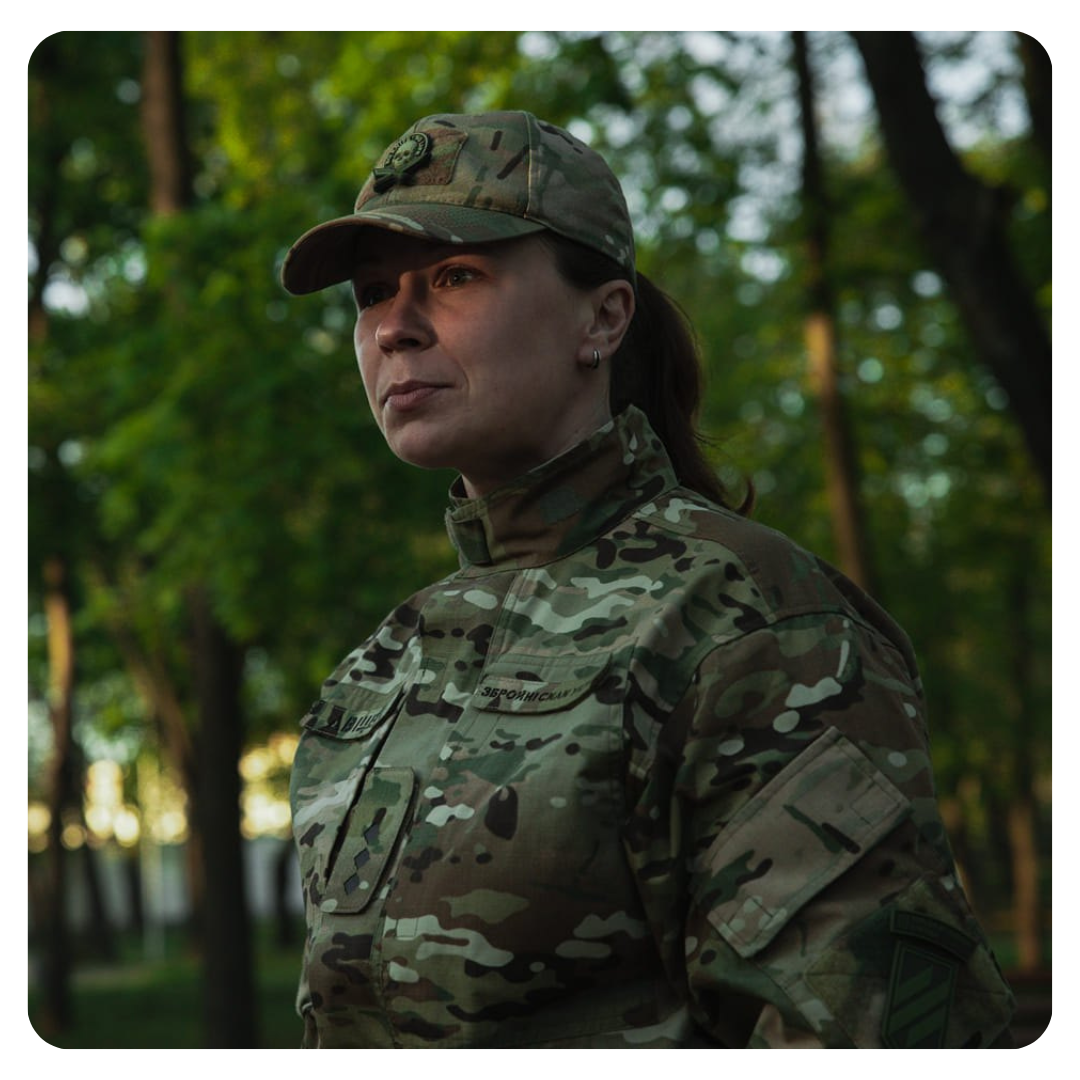
An obstetrician-gynecologist in her civilian life, Victoria first served as a frontline medic in 2014 and rejoined the army on the first day of the full-scale invasion in 2022. Today she is Chief Medical Officer of the 3rd Army Corps in Ukraine’s Land Forces, responsible for all medicine across more than 150 kilometers of front line — training, planning, logistics, and support. In conversation with PFC Podcast host Dennis Jarema, she offered a rare firsthand look at how the war is transforming battlefield medicine faster than any doctrine can keep up.
Drawing on her experience, Victoria describes the core lesson of this war in a single word: adaptability. Before 2014, she explains, Ukraine’s military medical training still followed Soviet-era programs — first-aid methods “from your grandfather’s period,” taught in a handful of school lessons and disconnected from modern battlefield reality. NATO cross-training changed everything, and Ukrainian medics embraced it, driven by a simple truth: they had to learn not only to fight, but to survive.
One of the starkest shifts she describes is the deliberate targeting of medical personnel. Frontline medics take far longer to train than infantry — and, in violation of every convention of war, they are hunted as high-value targets, as are evacuation vehicles. To close the gap, her corps now trains as many infantry as possible to Combat Lifesaver (CLS) level, so soldiers can treat themselves and their brothers-in-arms when a medic cannot reach them.
The drone-saturated battlefield has reshaped everything else. With constant aerial surveillance and the ever-present threat of FPV and Shahed drones, evacuation that once took minutes can now stretch to hours, days, or even weeks. Medics, Victoria says, must be trained not only in clinical skill but in rapid decision-making under threat — knowing when to keep working, when to move to cover, and how to prioritize when there is no time to think.
According to Victoria, sustaining a casualty in these conditions depends on three things above all: wound care over the long term, hypothermia management, and prolonged field care. Hypothermia, always a danger, has become critical as the wounded wait in cold trenches and shelters for evacuation that may not come quickly.
Her message echoes a hard-won truth of this war: the hardest skill is not placing a tourniquet or opening an airway — those can be taught. It is knowing when to act, and having the judgment to make the right call in seconds.
Victoria’s account underscores a broader reality of the war in Ukraine: frontline medicine is evolving alongside the battlefield itself. For field medics, saving a life often means overcoming not just injury, but time, terrain, and the constant threat of attack.
PFC Podcast: Thank you for joining us. What I’d really like to explore is adaptability — how adaptable armies and people have to be in order to save as many lives as possible. Ukraine’s ability to adapt to an ever-changing battlefield has been remarkable. So let’s start at the beginning. Before the war with Russia, what was medical training like in the military?
Victoria: When we talk about the “pre-war” period, we really mean before 2014 — because the war began in 2014, with the invasion of Ukraine’s eastern borders.
Before that, the training in our schools and universities followed the same programs we’d had in the 1980s and 1990s — very close to the Soviet education system. We learned things like how to use tourniquets and old-style bandages, the kind of equipment that was in our first-aid kits back then. But it was not modern at all. It belonged to a previous century, not to what we actually needed here and now.
PFC Podcast: Roughly how long were the courses?
Victoria: I can’t give you exact hours for the universities, but in school it ran across your final year — about one 45-minute lesson per week. Each week you’d get some training or a lecture on being part of the army: what a good soldier should know, how to use certain medicines, splints, and bandages — equipment from your grandfather’s era.
In medical school it was a period of roughly six months, with maybe two hours every two weeks. But again, it was all about the last century, not modern practice.
PFC Podcast: Then 2014 happened, and the U.S. and other NATO allies began cross-training. How difficult was that shift — Western countries adapting how Ukraine trained its military?
Victoria: For people who understood that they had to fight and survive, it was clear they needed to know everything about these first-aid kits: what the equipment was, how to use it. I was a participant in that training in the summer of 2014, before I joined the National Guard, and I don’t remember anyone who didn’t want to train.
It wasn’t easy, to be honest. This was completely new — things you’d never seen before — and you had to learn not only how to use each item, but how to conserve it, because you didn’t have spares. You had one first-aid kit.
For that period it was really difficult, but motivation and understanding why we needed this equipment carried us completely. And the great thing was the instructors — motivated people who came to Ukraine and taught us not just what the equipment looked like, but how to use it, how to store it, how to improvise. That’s what made it so valuable.
PFC Podcast: As the cross-training continued and you moved into 2022–2024, you started getting into more advanced interventions — blood transfusions on the battlefield, needle decompressions, finger thoracotomies, chest tubes. These are things physicians don’t always allow medics to do. How was the adoption of these higher-level skills, and the expansion of medics’ scope of practice?
Victoria: As with any change in a bureaucratic structure like an army, it’s always difficult — and sometimes it’s harder on paper than in practice. Explaining what you want to do, person to person, is often easier than writing it down and getting it formally approved.
Since 2022, we’ve run this training at several stages: during basic general military training, before someone joins the army; and for people already inside the army, through NGOs and the training centers we have across Ukraine.
In the first years of the full-scale war, we didn’t have big problems getting sign-off from the NGOs — the priority was simply to train people. Bureaucracy was the least of our concerns. We were focused on how to train, how to find good equipment for each soldier, and how to replace equipment lost in action.
Now, in 2026, we have many NGOs providing this training, official training centers within the armed forces, and instructors working in the centers that deliver basic general military training. In that basic training, they now dedicate 30 hours to military and tactical medicine.
After basic training, soldiers are sent to their brigades, battalions, or regiments, depending on their final assignment. There they go through an adaptation period — 14 to 30 days, depending on the unit, but never less than 14. During that time they train for a higher level of mine safety, air-threat awareness, general military skills, and also military medicine.
In our corps, that means training to the Combat Lifesaver (CLS) level. We try to train all our infantry to CLS level so they can provide care for themselves and their brothers-in-arms on the battlefield — for the cases when a frontline medic isn’t close by, when the terrain makes it hard to reach one, or when you’re holding a position for a long time and waiting for evacuation. You have to know what to do.
After that, tactical-medicine training continues during rotations. An infantry soldier holds a position for a period, then rotates to a location nearer the front, where they get further training in general military skills, assault operations, mine safety, and tactical medicine — including realistic scenarios with casualties during a mission. We try to refresh people’s knowledge and competencies across different situations, and that repetition happens as often as the rotation cycle allows, because we use tactical medicine constantly.
For frontline medics and lifesavers, the process is a little different — they get professional refreshers from our internal instructors. In our army corps, we have our own instructors who retrain field medics and lifesavers regularly, roughly once a year, or sooner if there are changes to the program.
PFC Podcast: So the 14 and 30 days — is that the soldier’s initial training or the medic’s?
Victoria: Let me clarify. Every soldier who joins the army goes through basic general military training, which lasts about 55 days. Within that, roughly 30 hours are dedicated to medicine — for all of them.
Those selected to be frontline medics then get an additional month of training focused solely on tactical medicine. Those who remain infantry join their brigade and go through the adaptation period, which everyone does. Other specialties — artillery, engineers, and so on — do their general training and then a specific course for their role.
PFC Podcast: So the medics get an extra month to become frontline medics. That’s how things were set up when the war started in 2022. Unfortunately, people die in war, numbers get worn down, and you have to replace them. Has that timeline had to adapt to the need for more people at the front, or has it stayed the same?
Victoria: When it comes to field medics, we have a shortage in our brigades. That’s one of the reasons we try to train everyone to CLS level — it’s part of the answer to that problem.
First, training everyone to CLS level. Second, using field medics not with the assault groups themselves, but closer to our positions — because a frontline medic takes much longer to train than an infantry soldier. And, unfortunately, field medics are a target for the enemy. It’s a valued target, the same as MEDEVAC vehicles, which they hit deliberately. It’s a situation where no convention of war applies. So we try to keep frontline medics closer to our positions, train our people to CLS level, and build up our own instructors — not only in the training centers, but within the army corps itself — so we can train more people inside every part of the system.
There aren’t enough training centers to train everyone in the army, and it’s much more effective to have your own instructors embedded in your structure, on a schedule, constantly training and refreshing your people.
PFC Podcast: That makes sense. The idea isn’t to shrink the school, but to elevate everyone around the medic, so the whole force is more adaptable and can handle situations for longer — so everything doesn’t fall on the medic alone.
That’s a feat in itself. But things also change. Technology changes. Early in the war it was artillery barrages and missile strikes, which continue — but now you have drone warfare. A combat lifesaver trained on Western methods now faces threats those methods weren’t designed for. Where and when are people learning to adapt — to survive around drones, to survive the barrages? Is it the internal trainers in their units passing on lessons learned?
Victoria: Most of the instructors in our basic general military training have battlefield experience from previous years. So when they train, they bring that personal experience — not to dramatize it, but to explain honestly that the battlefield is not an easy picture. It’s a hard one.
Second, unfortunately, all of Ukraine is a target. Every day, sometimes several times a day, we see drones over our territory — Shaheds and other types. So the idea that something in the sky can kill you is not new to anyone here; it’s our everyday reality. You don’t have to explain that danger from above exists.
But as you approach the frontline zone, the number and variety of drones increases — along with glide bombs and other threats. So people are first trained in the near-frontline zone to prepare mentally: how to understand information about incoming drones, what type they are, how much time you have to move from your location to some kind of shelter, and what you can do in that window.
It’s essentially training for decision-making: what will you do, and what takes priority? Do you continue providing care, or do you stop after applying a tourniquet, move to shelter, wait for the drone to strike elsewhere, and only then continue — or try to continue in the shelter itself? It all comes down to decisions, and rapid ones, because you don’t have much time to think. Sometimes you have to decide here and now. That’s one of the main competencies you need in this war.
PFC Podcast: The decision-making is so important. The skill of applying a tourniquet or a bandage, or opening an airway, isn’t particularly difficult — it’s knowing when to do it, when to evacuate. All those small decisions. That’s how someone locks in every skill, whether it’s dealing with the environment, the tactical situation, or the medical one — by getting knowledge, experience, and training in how to make the decision.
With all these threats — a transparent battlefield, constant surveillance, a constant nearby threat — the time from point of injury back to a Role 2 or Role 3 facility can be hours, days, even weeks. What are you now training frontline medics and lifesavers to do so they can sustain a casualty for days or weeks, essentially at the point of injury?
Victoria: We train them in wound care — what you can do with wounds over time.
Hypothermia is another critical piece. It’s always important, but in this era of drones and delayed evacuation its importance has grown, because casualties spend so long in trenches, shelters, and cold buildings while waiting for evacuation. Managing hypothermia has become essential.
And third, there’s prolonged field care in general — or, as I’d call it now, prolonged field care under [continuing conditions of threat].