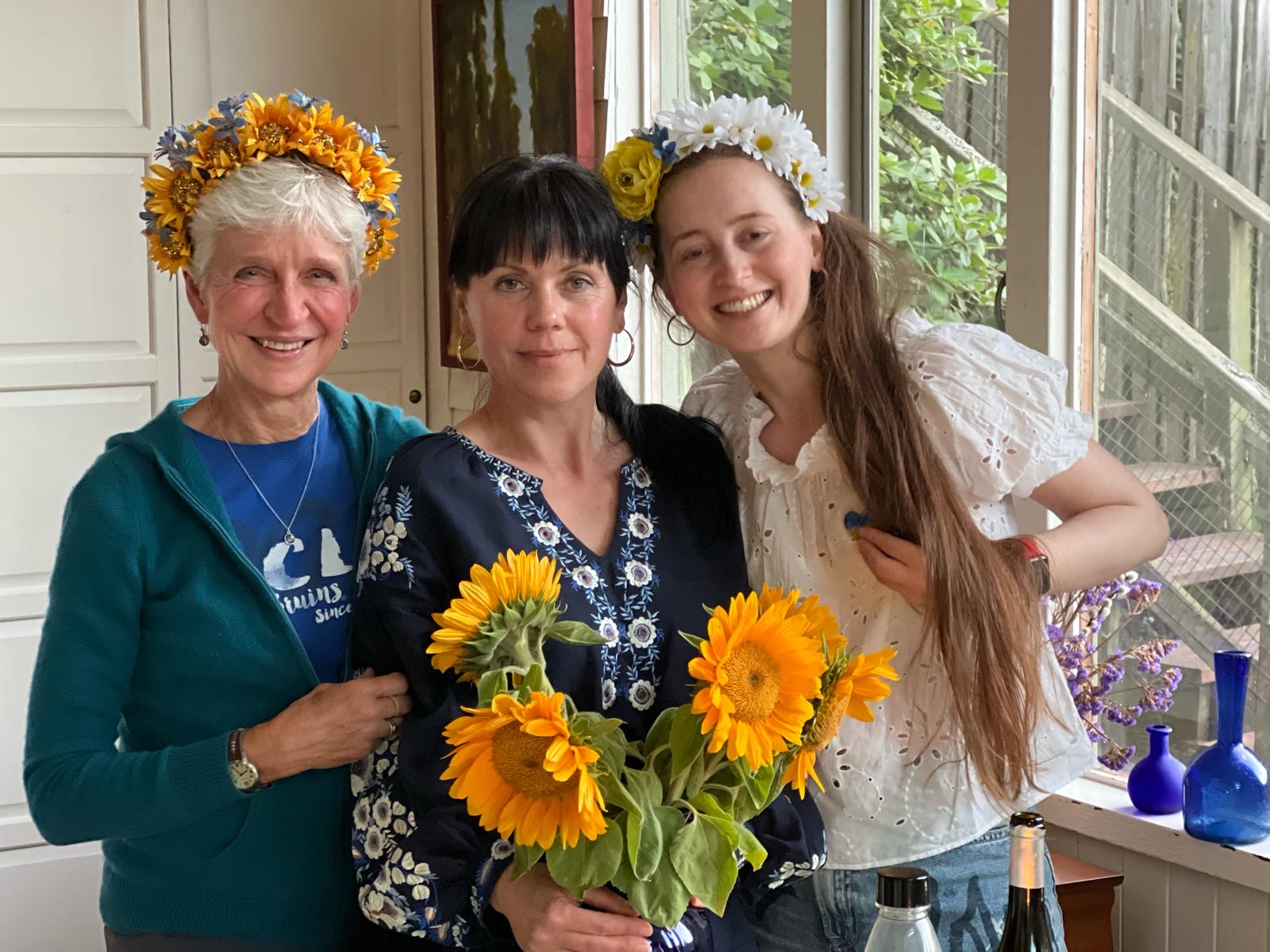
Victoria Talkington has been one of Leleka`s biggest individual donors for many years. She did not begin supporting Ukraine because of where her family came from. When Russia’s full-scale invasion started, she was not aware of having any connection to the country at all. Her reasons were simpler, and in her telling, more human: the invasion was wrong, people were resisting it, and she could help. “My connection is more emotional and philosophical,” she says. “Not because I identify as Ukrainian by genetics.” Today, a Ukrainian flag — signed by the medics of a frontline unit — hangs where she can see it. It was a gift she never expected, and it made her cry.
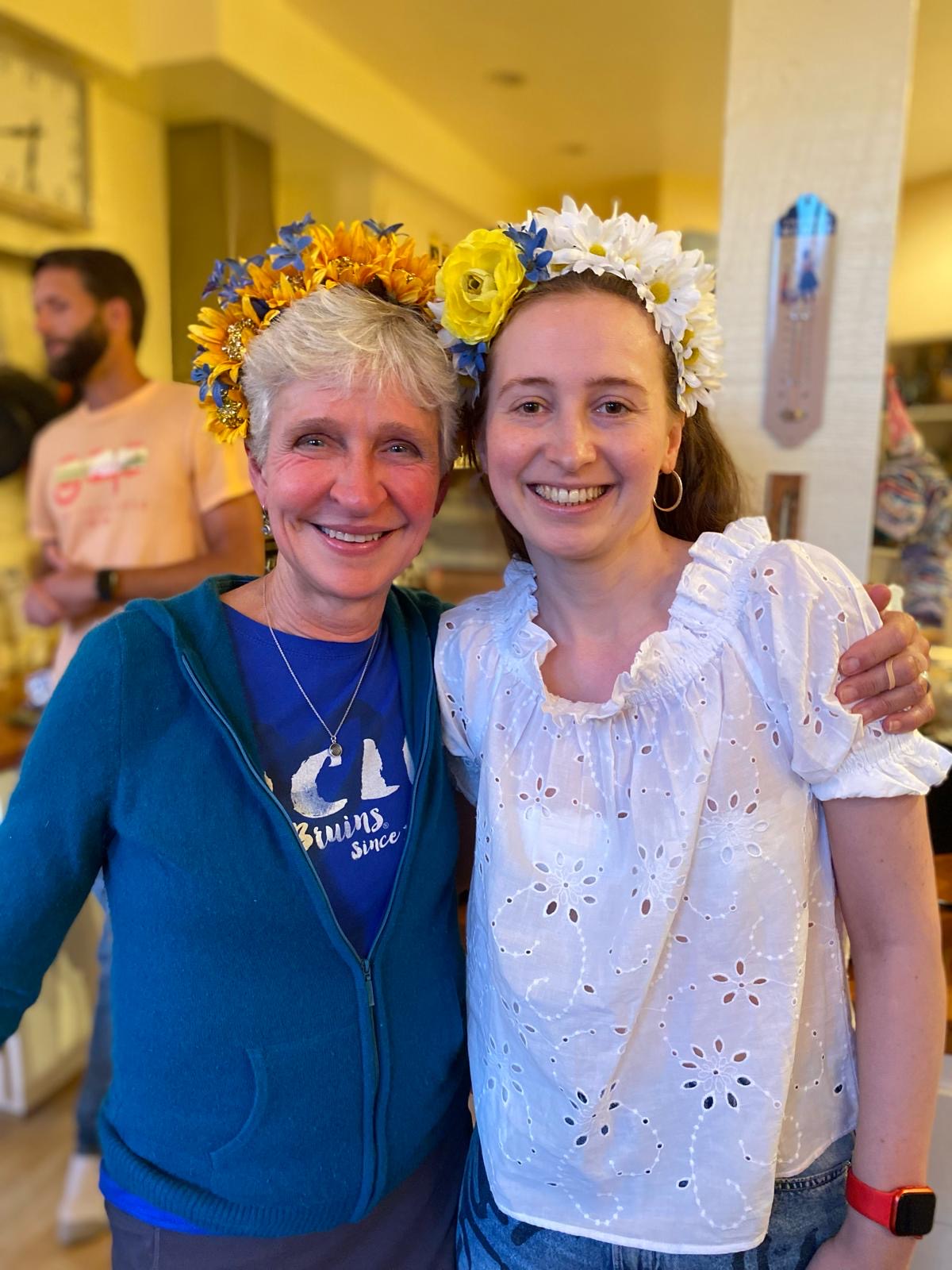
In the first weeks of the war, Victoria and a group of friends did what they could with what was in front of them. They gathered medical equipment and supplies — a local Costco offered up what it had on hand — and sent over needles, syringes, and bandages. She wanted her help to reach people directly and quickly. She donated to a Ukrainian military fund that was later shut down, and to another organization inside Ukraine that was blocked. So she went looking for channels she could trust — people, not bureaucracy. “I wanted to get money and supplies fast on the ground,” she says. This is how she found Leleka and found it, in her words, “really strong and credible.”
Asked how long she’ll keep supporting Ukraine, Victoria doesn’t hesitate: for as long as it continues. She sees this war as one of the defining tests of the age — a world that either stops aggressors, or teaches them they can take whatever they want.
And asked what she’d say to Ukrainians after all these years, she answered plainly. “I admire the people who are resisting the invasion,” she says. “People who volunteered everything, including their lives, for a vision of a society that is unified, that is democratic, that is of the people, by the people, for the people. I’m impressed by the incredible bravery.”
She insists she is doing nothing exceptional. “I’m just doing what I think many more people should be doing,” she says. “So I don’t feel like I’m doing anything special.”
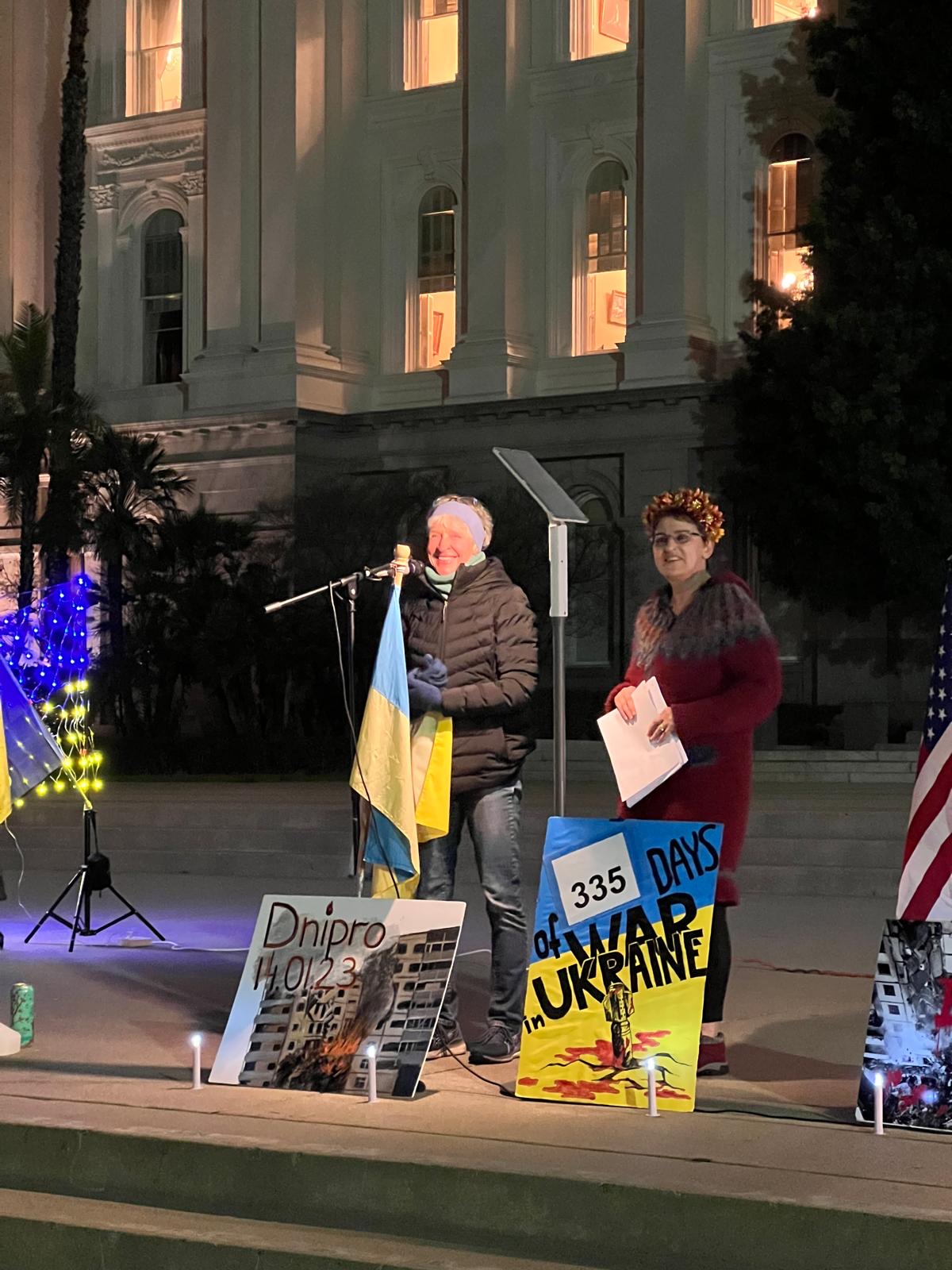
Leleka: You have been helping Leleka and being one of our biggest individual donors for many years. What is your motivation? Do you have Ukrainian roots?
Victoria: When I started supporting Ukraine’s defense against the invasion, I wasn’t aware of any Ukrainian connection at all. Later I found out my partner’s family had emigrated from Odesa in one of the programs in the late 1800s or early 1900s. I did a DNA test on myself, and there’s a segment that comes from the region that’s now Ukraine. But my connection is more emotional and philosophical. It’s not that I identify as Ukrainian by genetics.
Leleka: How did you start helping?
Victoria: When the war first started, some friends and I gathered medical equipment and supplies. The local Costco had things they let us take. We sent over needles, syringes, bandages — not a lot in military terms, but enough to treat a unit. I also donated directly to a Ukrainian military fund, which got shut down, and to another organization inside Ukraine that got blocked. So I looked for other ways to help — with my time or my resources.
Leleka: And that’s how you found people you could trust on the ground?
Victoria: Yes. I made connections with two Ukrainian women who live relatively near me. One was Natalia — I’d adopted my kittens from her about five months earlier. I remembered she was Ukrainian, so I called her, because I didn’t want to go through an NGO. I wanted to get money and supplies onto the ground fast, and she had connections. The other was a scientist, Olga, who was gathering supplies and helping with the medical side. Through them I started donating directly to a unit — helping buy a couple of ambulances and drone-repelling equipment. Most of the NGOs weren’t doing what I was interested in. I wanted to help the people resisting the invasion, not only the people fleeing.
Leleka: Tell us about the flag behind you.
Victoria: Olga’s nephew is a medic. I was looking for a way to make direct donations to people who were trustworthy, so my donations went to Olga’s account for charity purposes. She bought a number of ambulances — there were many people donating — and she tracked all the expenses. I gathered that I’d become a big supporter of theirs. Two years ago, the unit sent her a flag they’d signed, and she sent it on to me.
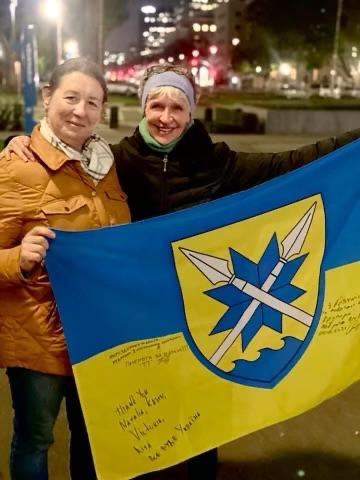
Leleka: What was that moment like?
Victoria: I cried. I wish I could do more.
Leleka: Why do you believe it’s so important to keep supporting Ukraine, all these years?
Victoria: It’s a philosophical stance as a human being. I find it impossible to believe the Russian leader decided to send in troops to take over Ukraine. You just don’t do that. It’s wrong — there’s no world in which that’s right. Ukraine made it clear: we might not be perfect, but we want to run our own country, govern ourselves, move away from a system that’s totalitarian and corrupt. To me it’s like World War II all over again. I don’t want to live in a world where bullies say, “I want your country, and I’m coming in with tanks.” I view it as an existential threat to the world as a reasonable place for humans to live, if the world community allows this kind of behavior.
Leleka: How do you feel about the American response?
Victoria: At the beginning, my friends and I made political efforts — reaching out to politicians regularly. I’m in a part of the country where our senator and representative are supportive of Ukraine. A lot of my friends were worried about Putin’s blustering about nuclear weapons, but I thought he was too smart to use them. He’s a bluffing bully. He’ll take whatever he can get away with, but he won’t do something that would really harm Russia. My regret is simple: I wish the U.S. had committed far more resources earlier. I wish Europe had. I wish the world had. I’m not president — I can only do what I can do.
Leleka: You know some of these stories personally, not just from the news.
Victoria: I do. I became friends with these people because of the war. Natalia’s parents live just outside Kyiv, and that’s been intermittently rough. Olga’s family is in the Donetsk region — her mother is now on the Russian-occupied side. Olga is here in the U.S. working as a scientist, and she has friends who’ve been killed. One thing I learned recently is that people share videos of Ukrainian prisoners being harmed, and families search them to look for their loved ones. Just last week, a friend of Olga’s found her husband on one of those videos. He’s alive.
Leleka: How long are you prepared to support Ukraine?
Victoria: For as long as it continues. I think there are two major threats in the world right now: one is how AI gets used, and the other is letting places like Putin’s Russia — and possibly China — get the idea that just because they want something, they can go grab it. Years ago I traveled to the Republic of Georgia, and there were Russian troops on the border. The people I met were lovely, and they didn’t want the Russians coming in. So when this happened in Ukraine, I knew what kind of fear that is. People living in fear is not good. I’m with Ukraine, to the extent I have the ability to help.
Leleka: What would you like to say to Ukrainians?
Victoria: I admire the people who are resisting the invasion. People who volunteered everything, including their lives, for a vision of a society that is unified, democratic, of the people, by the people, for the people. That’s what my own country was founded on. I admire it, I support it, and I’m impressed by the incredible bravery. I’m just doing what I think many more people should be doing. I don’t feel like I’m doing anything special.
Slava Ukraini.